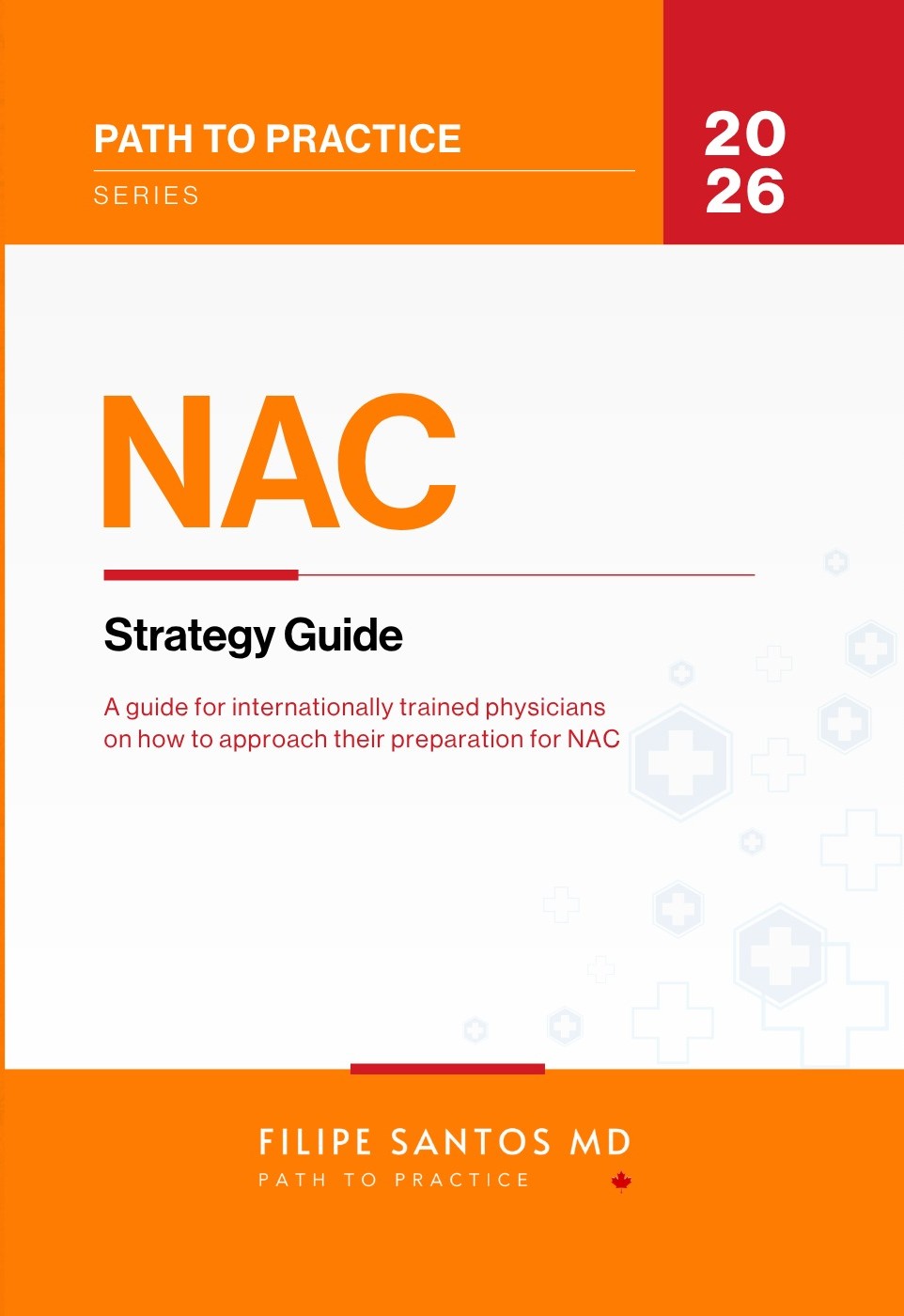
Look inside
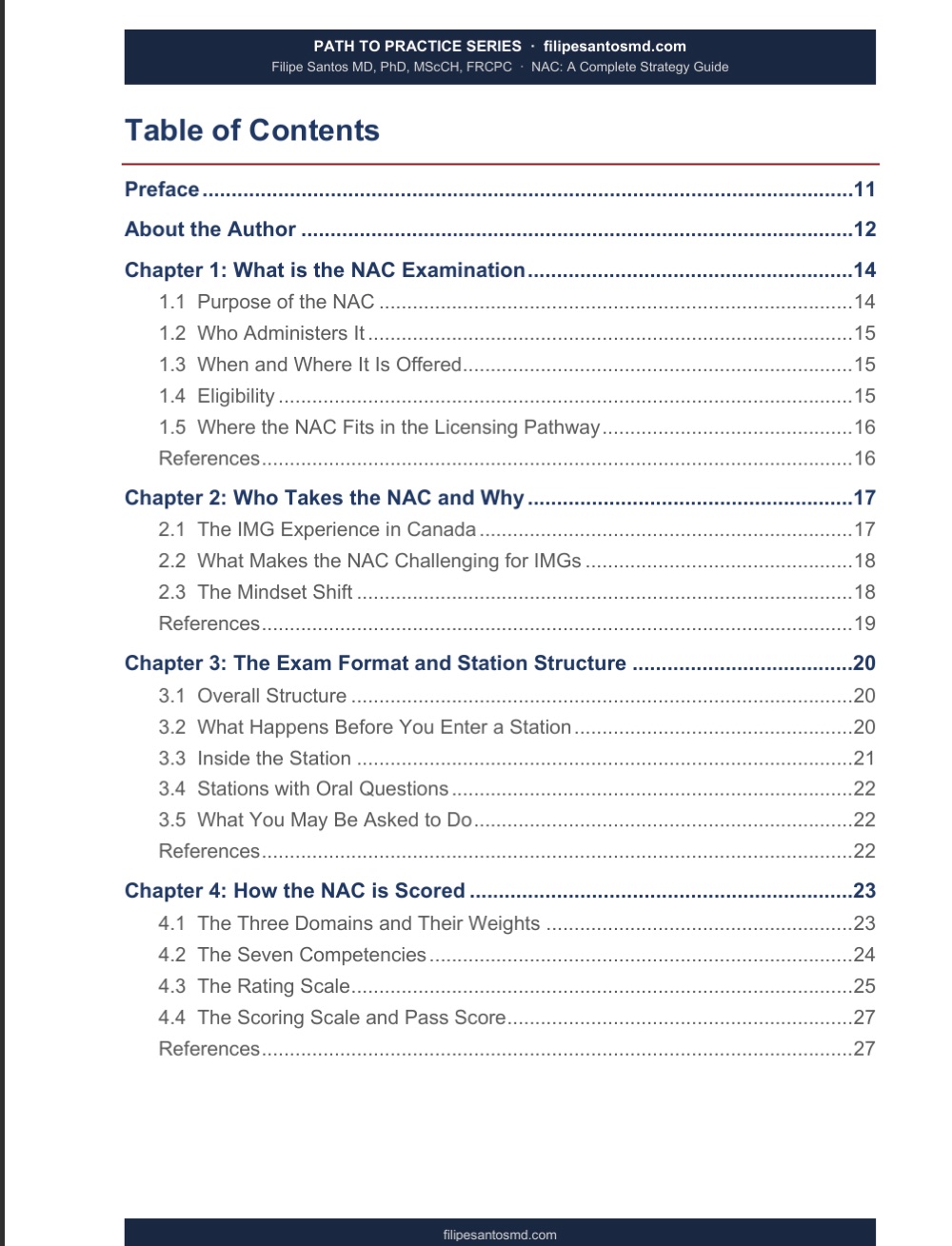
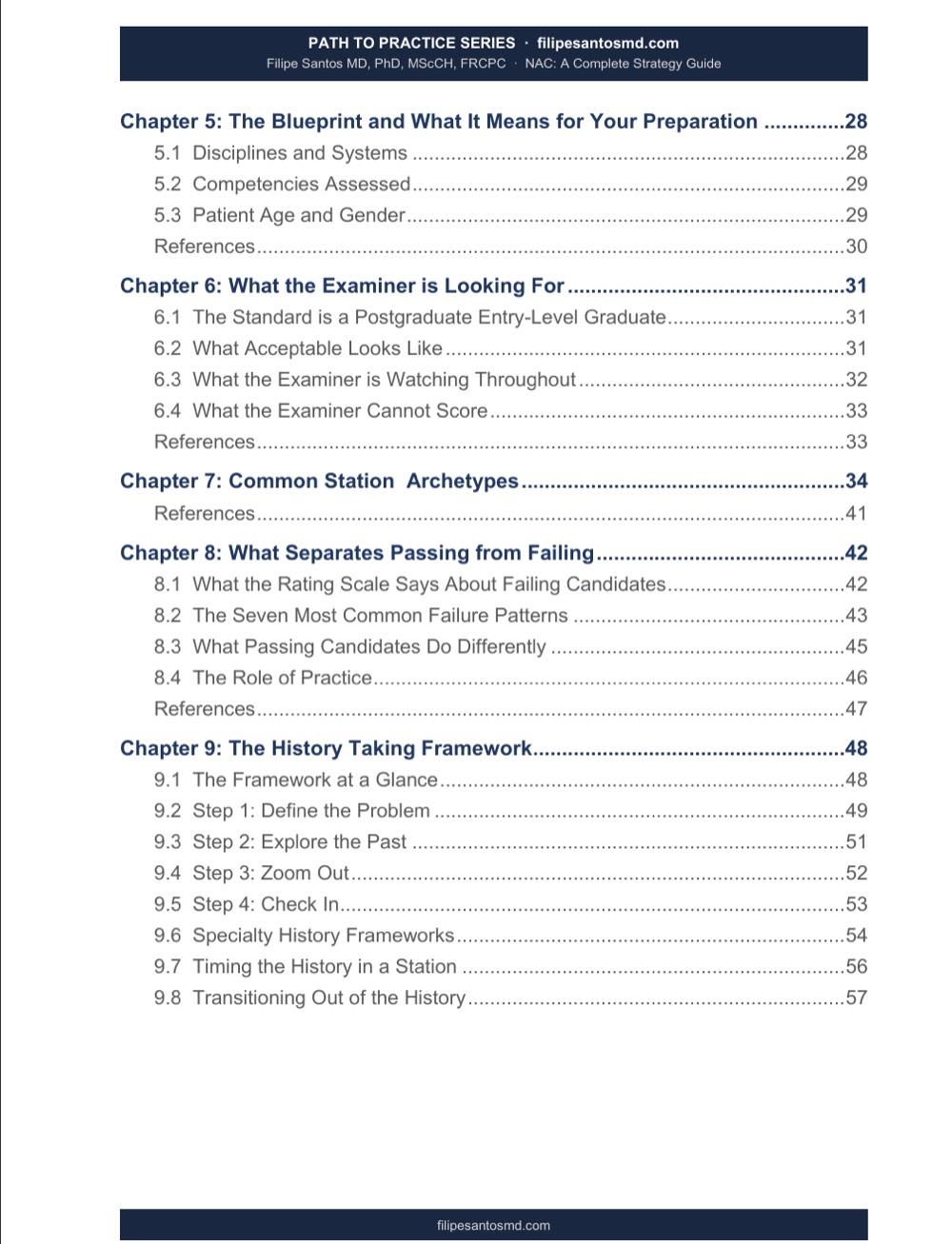
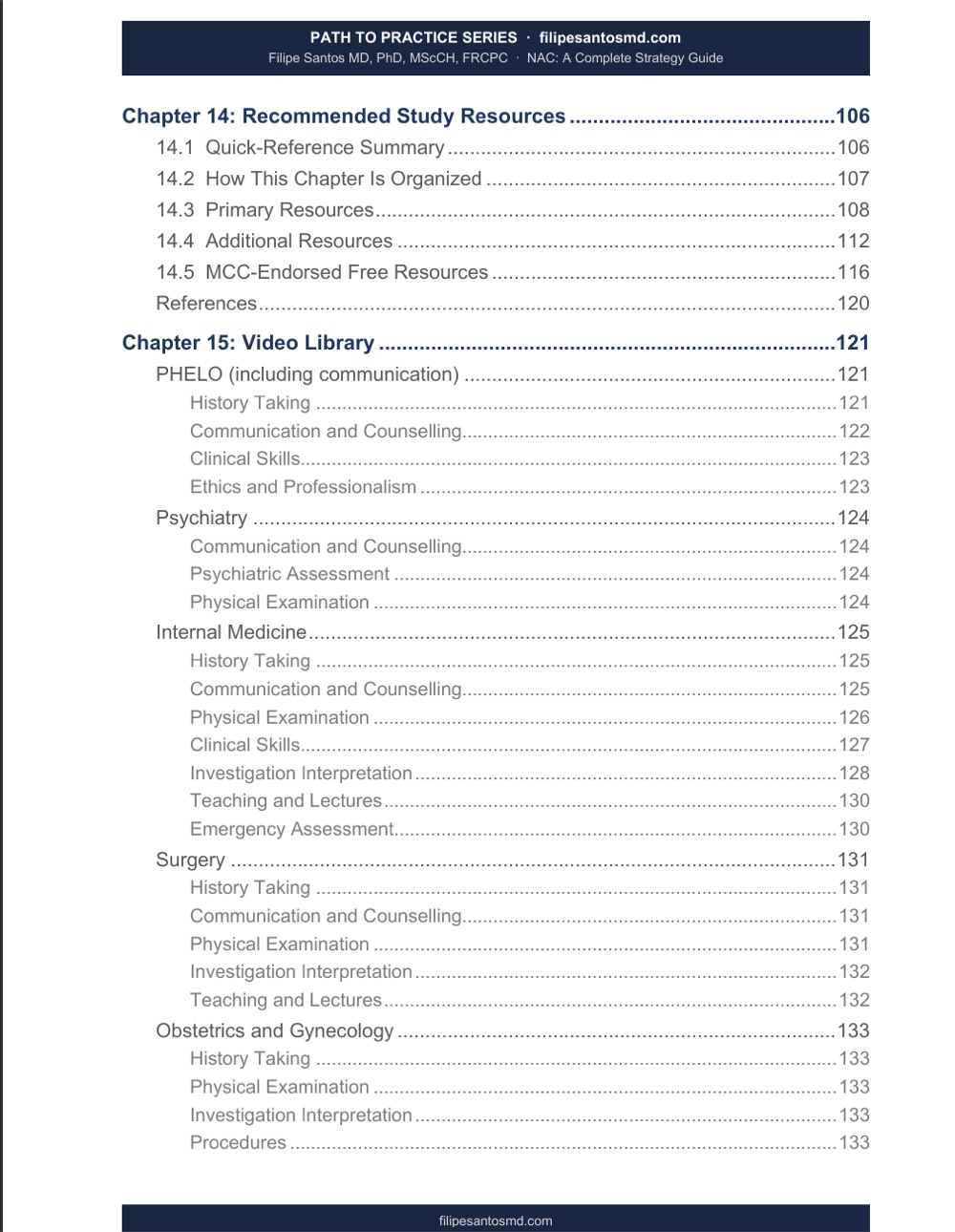
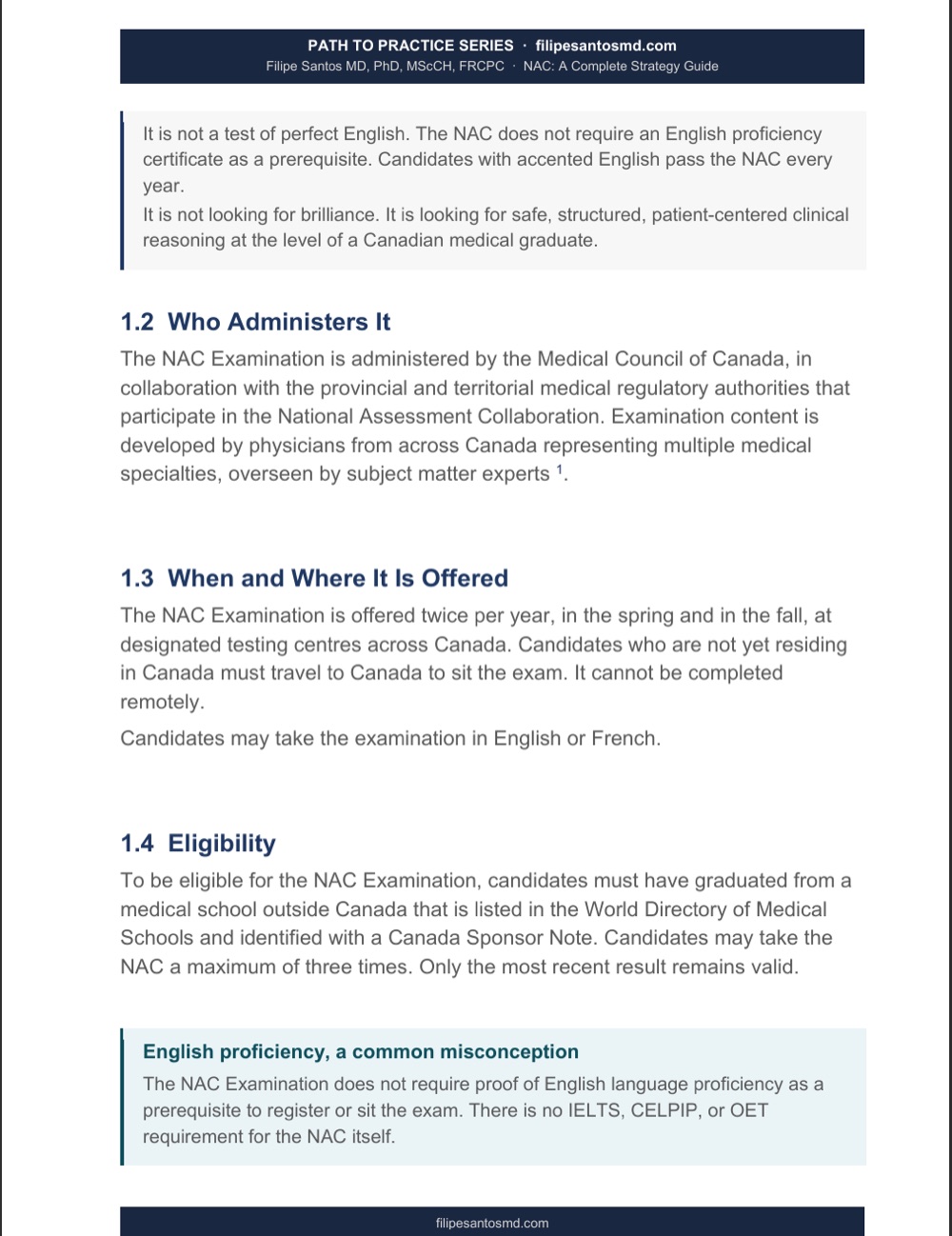
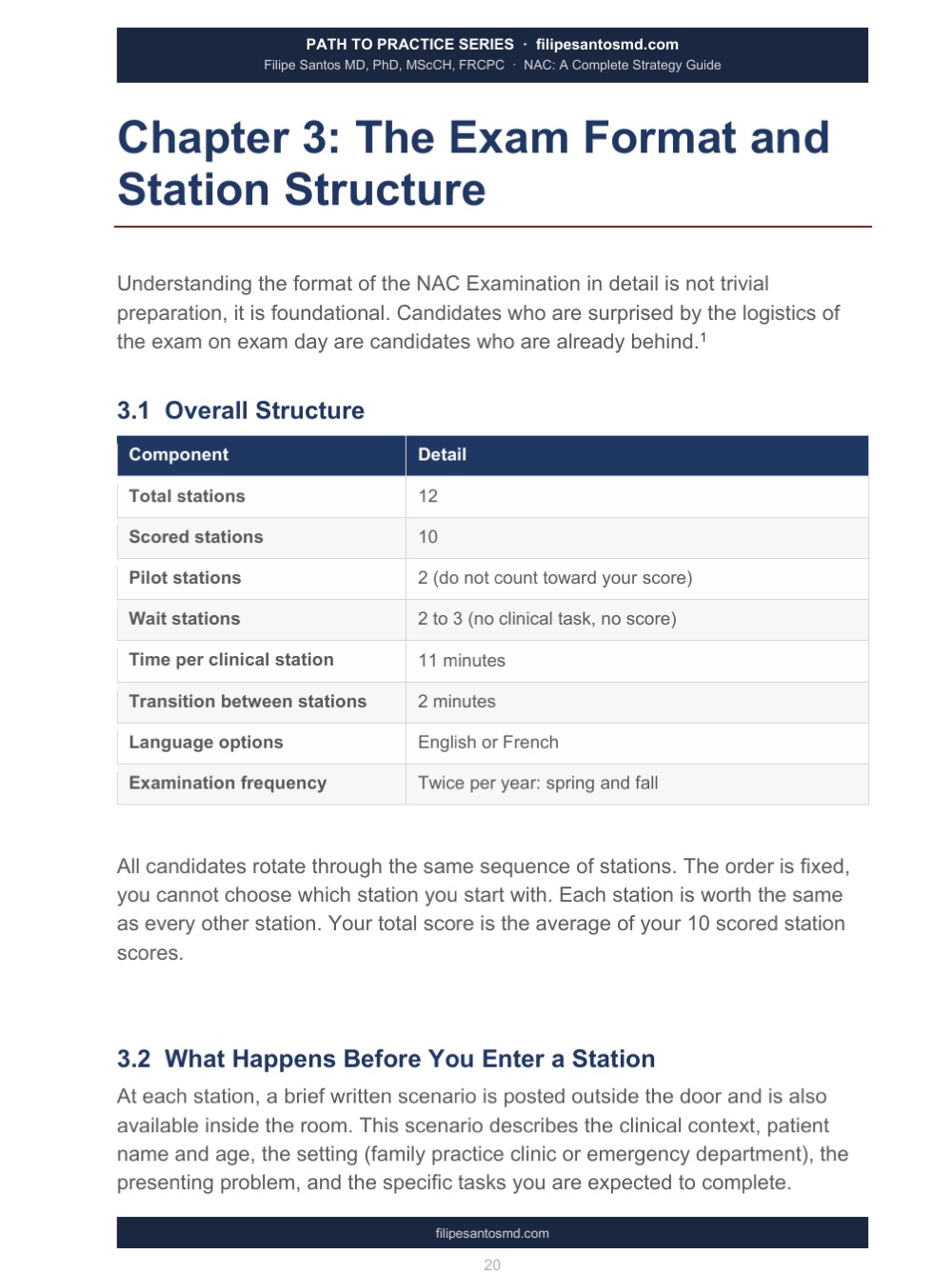
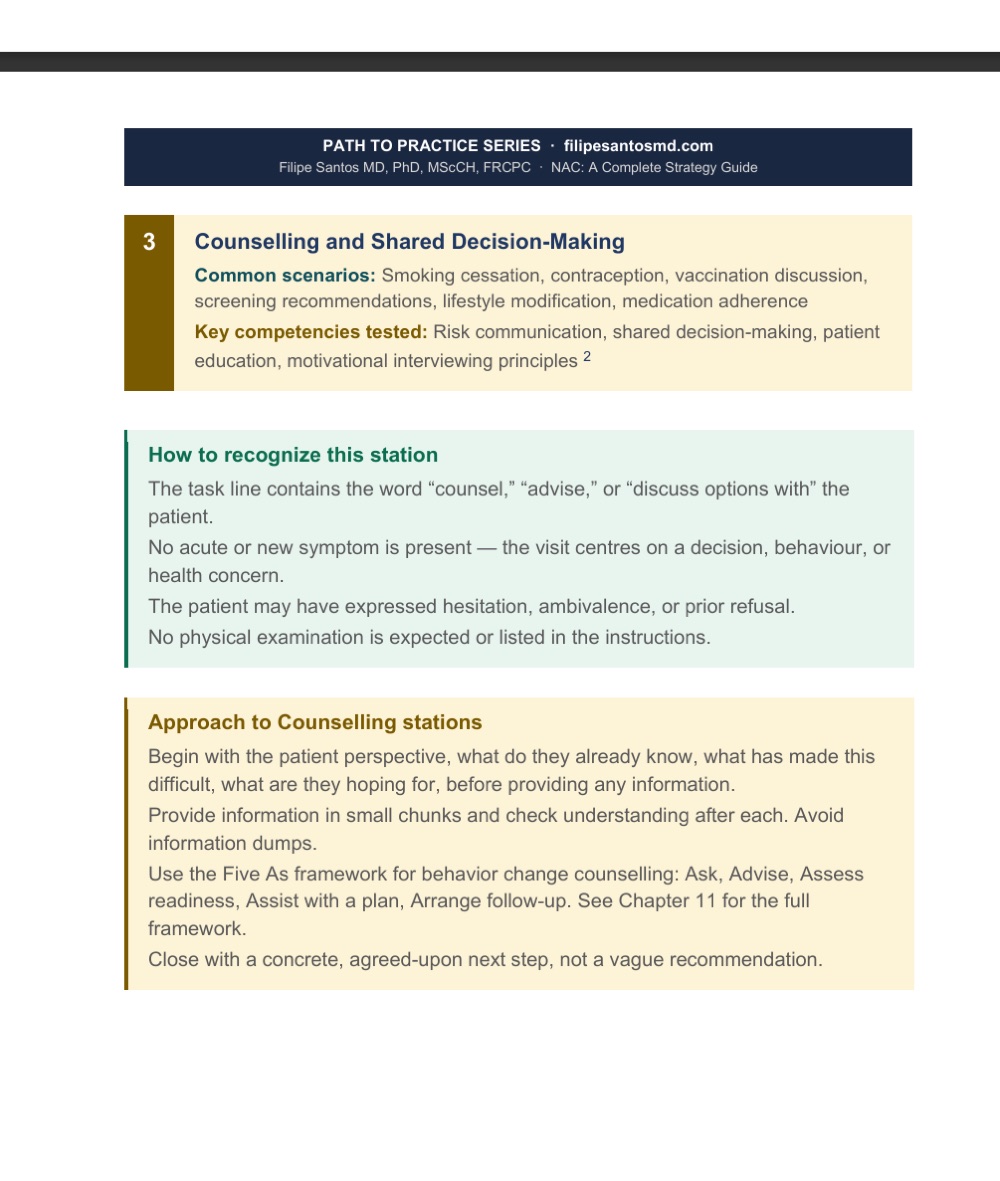
Swipe through sample pages · click any page to view it full size
The gaps this guide is built around
A few of the reasons knowledgeable candidates lose marks:
- Time runs out before the plan is delivered
- Reasoning is structured the way it is in the candidate’s home country, not the way Canadian examiners are scoring
- The candidate opens well, then loses points the moment the patient gets upset, confused, or discloses something hard
- The social context is treated as a footnote, when in Canada it is a scoring domain
- The candidate knows the diagnosis but cannot present it the way the rating scale is asking for
This guide is built around those gaps. It does not teach medicine. It teaches the specific way a Canadian OSCE has to be performed and scored, and it gives you a framework for every component of an encounter so nothing is left to chance on the day.
What’s inside
- The 4-Step History Framework. Define, Explore, Zoom Out, Check In. A repeatable structure for taking a focused, scorable history under time pressure, with specialty variants for psychiatry, obstetrics, and pediatrics.
- The Narration Framework for physical examination. What to say out loud, when to say it, and how to translate every manoeuvre into the language examiners are listening for. Includes worked narration examples for the major systems.
- SPIKES and PEARLS for communication stations. The two communication frameworks Canadian examiners expect you to know, plus a library of sample phrases for every stage of an encounter, including the difficult conversations that decide pass or fail.
- The IDEA structure for diagnosis and management. Impression, Differential, Evidence, Action. How to present clinical reasoning in a way that earns marks across the differential, the investigations, and the management plan, even when you are uncertain.
- Station archetypes, decoded. A breakdown of the major NAC station types, including the “How to recognize this station” cues that tell you, in real time, what is actually being tested.
- The 7 failure patterns. A direct analysis of the most common habits that quietly cost knowledgeable IMGs their pass, with the specific corrections for each.
- The scoring lens, explained. How examiners weight the three core domains and the seven competencies, and where international candidates predictably leak points.
- A curated video library. A hand-reviewed library of free videos for every major NAC topic, organized first by discipline (PHELO, Psychiatry, Internal Medicine, Surgery, Obstetrics and Gynecology, Pediatrics) and then by skill. Every entry is a direct link to a free resource on YouTube or an academic site (Boston University, Stanford, and others), so you can move from a topic to a video without searching for it.
- A reviewed list of NAC study resources. Honest reviews of Toronto Notes, the Edmonton Manual, the OSCE Handbook, OSLER AI, and Master The NAC, with guidance on what each is and is not good for.
This is for you if
- You are preparing for the NAC OSCE and want a written strategy guide, not a video course
- You trained outside Canada and need to bridge the gap to Canadian clinical expectations
- You want one reference that covers structure, scoring, frameworks, and resources in one place.
Best paired with
The 100-Day NAC Study Plan (the day-by-day execution plan built around this guide), Toronto Notes, the Edmonton Manual, the OSCE Handbook, OSLER AI for scenario practice, and any clinical reference you already use. The Strategy Guide is the framework layer. Your clinical references are the content layer. Used together, the two cover everything the NAC tests.